



What is Deep Discharge? Common Mistakes That Shorten Battery Life

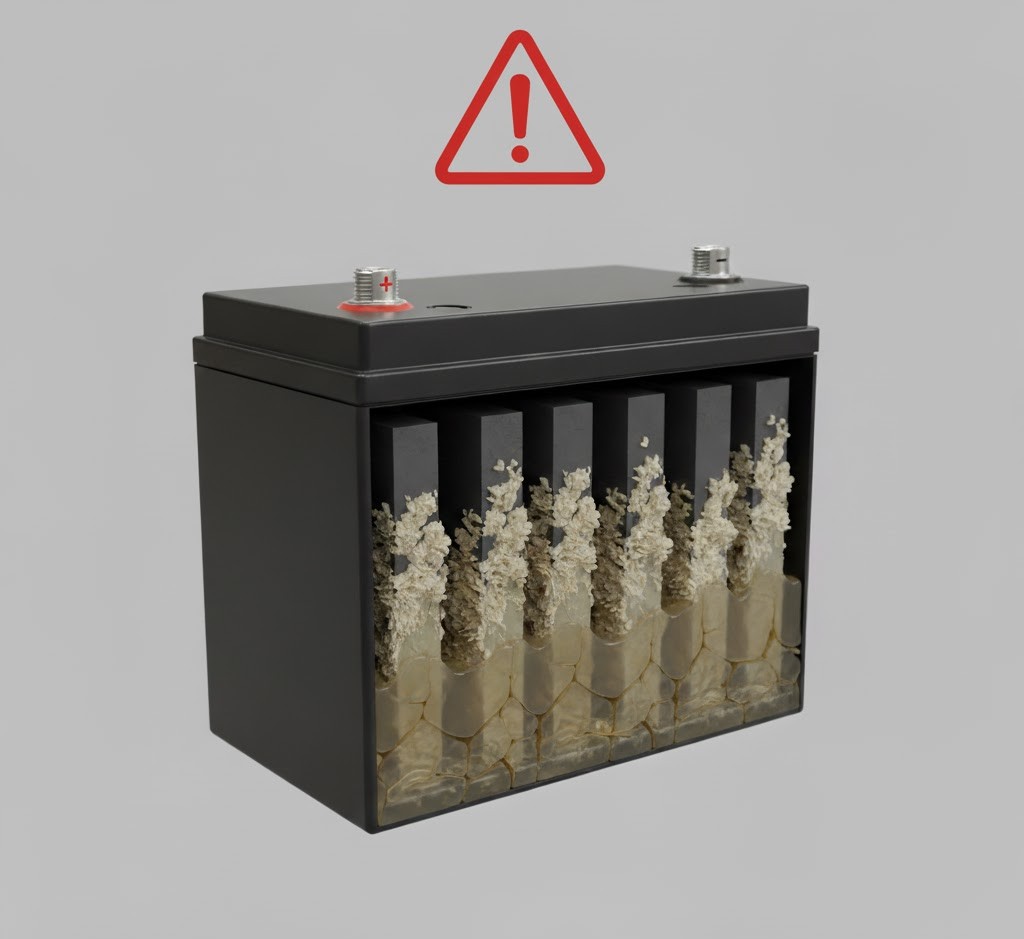
Deep discharge is one of the most common problems encountered in energy storage systems and directly affects battery life. Batteries regularly undergo charge-discharge cycles, particularly in solar energy systems, RV and marine applications, UPS, and telecom power solutions. However, discharging the battery to levels well below its capacity can cause irreversible deformation in its internal chemistry. This not only shortens battery life but also reduces energy efficiency, compromises system stability, and leads to unexpected additional costs. Understanding what deep discharge is, why it occurs, and how it can be prevented forms the basis of a proper battery management strategy.
What is Deep Discharge of a Battery?
Deep discharge occurs when more than 80% of the battery’s capacity is used or when the battery’s nominal voltage drops below its safe operating values. For example, the safe limit for a 12V battery is around 11.8V. Dropping below this voltage initiates chemical deterioration in the cell structure. Deep discharge can cause irreversible damage, particularly in gel and AGM batteries. In lithium batteries, deep discharge can cause the cells to shut down completely.
Deep discharge in battery systems usually occurs due to high energy demand, insufficient capacity selection, or prolonged lack of charging. The more frequently it occurs, the shorter the overall life of the battery.
The Effect of Deep Discharge on Battery Chemistry
Batteries store chemical energy thanks to their electrolyte and plate structure. When deep discharge occurs, the structure of the plates begins to deteriorate, and sulfate crystals concentrate, especially in the lead-acid group. This alters the acid balance of the electrolyte and reduces battery capacity.
When sulfation becomes permanent, the battery cannot deliver the desired current and voltage even when fully charged. In other words, the battery appears to be full, but its functional capacity is significantly reduced. This chemical change is irreversible and shortens the battery’s life.
Why Does a Deeply Discharged Battery Lose Capacity?
During deep discharge, the active material structures inside the battery are damaged, causing the chemical reactions within the battery to become inefficient. This leads to a decrease in capacity. The more a battery is subjected to deep discharge, the faster its working capacity decreases.
Capacity loss manifests itself as follows:
- The battery drains faster.
- It stores less energy after charging.
- Charging time increases.
- The battery experiences a faster voltage drop under load.
The Relationship Between Battery Cycle Life and Depth of Discharge
Every battery has a cycle life. Cycle life refers to how many times a battery can withstand a full charge to a full discharge. As deep discharge increases, the number of cycles decreases. For example, deep-cycle gel batteries offer 1200 cycles at a 50% discharge level, while at an 80% discharge level, this value can drop to 600 cycles.
Therefore, always using the battery within the 50–70% capacity range significantly extends its life.
AGM, Gel, and Lithium Batteries: Differences in Deep Discharge
AGM Batteries: They are more sensitive to deep discharge, and their capacity decreases rapidly under frequent deep discharge conditions.
Gel Batteries: They have higher deep cycle performance and tolerate up to 70% discharge better. For this reason, they are common in solar and mobile systems.
Lithium Batteries: Thanks to the BMS (Battery Management System), they protect the cells and automatically shut down when deeply discharged. However, lithium cells that remain closed for a long time can become irreversibly damaged. They are common in mobile systems.
Common Reasons for Deep Discharge in Solar Systems
- Insufficient selection of solar panel capacity
- Low battery capacity
- Incorrect calculation of load consumption
- Incorrect charger regulator settings
- Short daylight hours during winter months
Installing solar systems without calculating battery capacity is the most common cause of deep discharge.
Battery Life-Shortening Incorrect Charging and Discharging Habits
- Do not charge the battery to full capacity
- Discharging the battery completely frequently
- Using the wrong charging voltage
- High-current discharge
These significantly reduce both the battery’s cycle life and efficiency.
Overload, Thin Wiring, and Loss Problems
System wiring plays a decisive role in battery efficiency. Thin-gauge cables heat up when carrying load current and cause power loss. This leads to the battery consuming more energy unnecessarily and discharging more quickly.
The cable cross-section must always be selected correctly according to the load current.
The Effect of Battery Charging Control Device Selection on Deep Discharge
The charge controller is a critical component that prevents the battery from over-discharging. MPPT regulators charge the battery more efficiently and stably, providing higher efficiency compared to PWM regulators. Additionally, most MPPT devices feature a deep discharge protection setting.
Failure to make this adjustment correctly may cause the battery to deteriorate quickly.
Practical Solutions to Prevent Deep Discharge
- Calculate the battery capacity accurately according to the actual need.
- Configure the charger regulator settings according to the battery type.
- Be sure to choose models with a BMS in lithium batteries.
- If necessary, add an additional solar panel or a second battery to the system.
- Connect high-current devices to a separate circuit.
These simple measures both improve battery performance and reduce long-term costs.
