



Power Supply for Boiler (UPS)

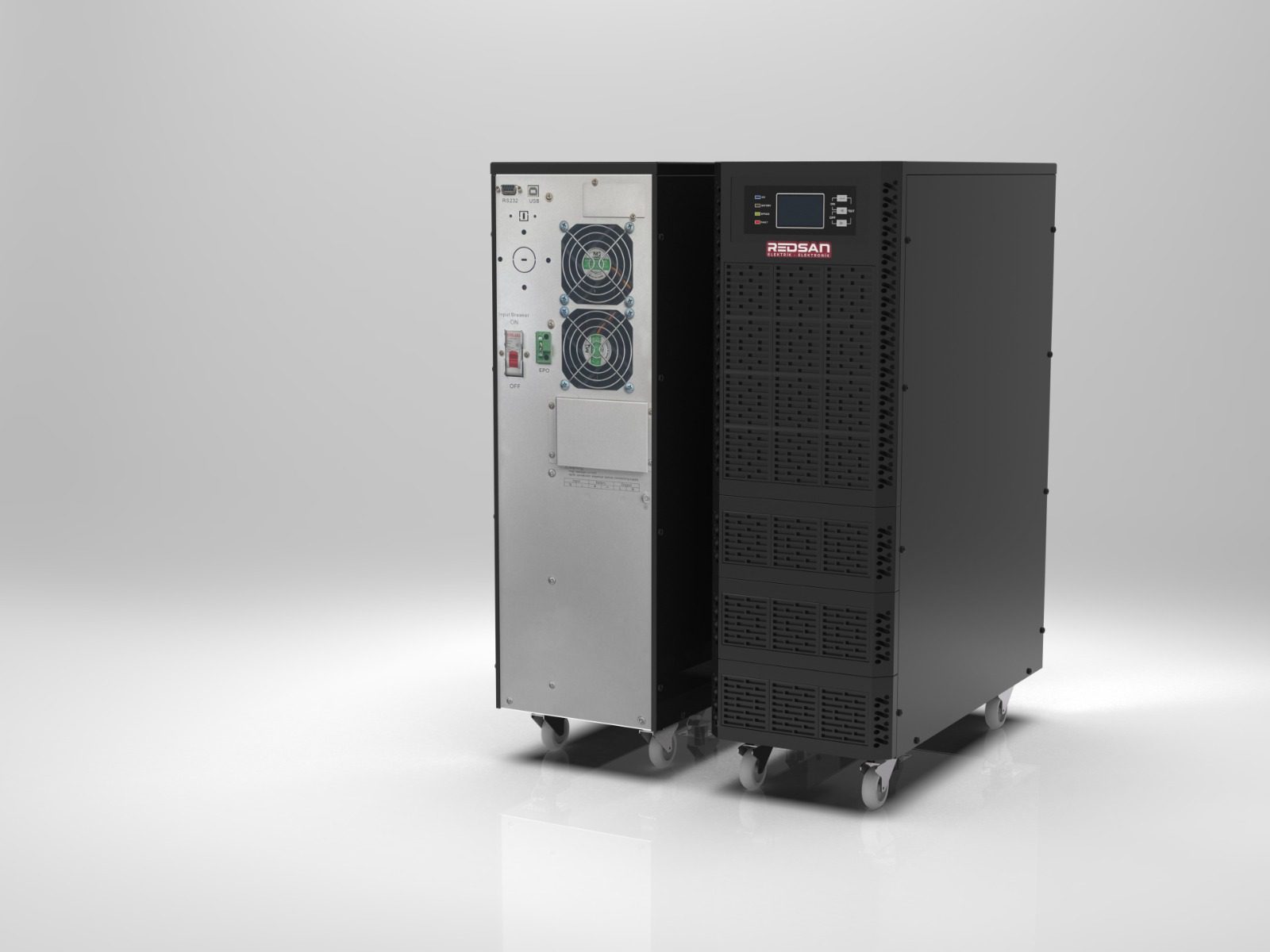
The boiler is the heart of a building’s entire heating system. Boiler systems, which operate continuously, especially during the winter months, distribute hot water and heat throughout the entire structure thanks to pump motors, electronic control boards, ignition mechanisms, and sensors. However, since this important system runs entirely on electricity, a power outage not only stops heating but can also cause the temperature inside the boiler to rise uncontrollably, leading to serious malfunctions. For this reason, using a “UPS for Boilers” is now more of a necessity than an option.
UPS systems used in boiler rooms activate immediately when the power goes out, ensuring that the boiler control board, circulation pump, and other control components continue to operate. This eliminates safety risks and prevents the system from shutting down. Especially in areas where power outages are frequent, boilers operating without UPS have high failure rates. This situation leads to costly repairs and disruptions to user comfort.
Why is it essential to use a UPS for a boiler?
Although boiler systems have a mechanical structure, they require electronic components to continue operating. The control panel, ignition system, pump motors, and sensors are powered by electricity. When the power goes out, these components stop working and the following problems arise:
- The boiler suddenly stops and the water circulation is interrupted.
- Due to the rise in temperature, the water in the boiler may approach boiling point.
- Pump motors may be damaged.
- There is a risk of the electronic card burning out.
- During a winter outage, the building is left completely without heating.
All such problems can be easily prevented with a UPS of the correct capacity. When a UPS is used, even if there is a power outage, the system does not shut down completely; the pumps continue to operate and ensure that water circulates within the boiler. This is an essential requirement for both comfort and safety.
Which UPS Type Should Be Used in a Boiler?
Since boiler systems contain motorized equipment, the UPS used must be suitable for this purpose. Therefore, the most appropriate choice is an online UPS model. An online UPS provides the most stable and cleanest electrical current because it continuously filters the power, even if there is no power outage.
The main reasons for using Online UPS for boiler systems:
- Handles the starting current in motorized devices without any problems.
- Protects electronic cards from voltage fluctuations.
- It provides zero interruption due to continuous power conversion.
- Provides high security during the winter months.
Line-interactive UPS models can be used with computers or small devices, but Online UPS should be preferred for critical systems such as boiler systems.
Suitable UPS Power Capacity for Boiler
One of the most frequently asked questions when purchasing a boiler UPS is the correct power capacity. This is because boiler systems use both electronic cards and one or more circulation pumps. Pump motors draw high current during initial startup. Therefore, a UPS with a capacity greater than the actual load should be selected.
The general calculation is as follows:
- Boiler control board: 20W – 80W
- Circulation pump: 60W – 120W (varies by model)
- Second pump (if applicable): +60W – 120W
An example system:
- Boiler card → 40W
- 2 pumps → 2 × 90W = 180W
Total load: 220W
Ideal UPS power range for this type of system:
- 2 kVA Online UPS
- 3 kVA Online UPS (recommended for high-security systems)
In larger boiler rooms or commercial buildings where multiple pumps are used:
UPS seçenekleri tercih edilebilir.
Advantages of Using UPS in Boilers
A UPS is not just a system that kicks in during power outages. It also regulates power fluctuations. Therefore, it extends the life of the boiler system and significantly reduces breakdowns.
The main advantages of using UPS:
- The boiler does not stop when the power goes out.
- The boiler does not stop when the power goes out.
- The electronic control board is protected from fluctuations.
- Most boiler malfunctions can be prevented.
- The comfort of the building’s residents is not interrupted.
In boilers that operate without a UPS, power outages, especially during winter, can lead to much more serious problems. For this reason, experts strongly recommend the use of a UPS.
How to Install a Boiler UPS?
UPS installation requires professional expertise. Proper connections must be made, taking into account the load values of the pumps, the starting current, and the sensitivity of the control board. An incorrectly selected or improperly connected UPS can damage the equipment and may fail to operate the system during an outage.
The installation steps are generally as follows:
- The load analysis of all devices in the system is performed.
- An online UPS with the appropriate kVA rating is selected.
- The pump and boiler card are connected to the UPS output.
- The UPS is tested by applying an outage scenario.
After installation, the UPS should be tested at regular intervals.
What to Consider When Choosing a UPS?
When purchasing a UPS for a boiler, making a selection based solely on price can pose serious risks. The most suitable UPS is one that is determined according to the system’s needs and is an online model.
Points to note:
- Actual power capacity
- When choosing online UPS technology, the following criteria are important:
- Low noise level
- Battery life and battery quality
- To be able to handle the starting current
- Number of pumps used
Where Can You Get a UPS for Your Boiler?
Online UPS models with different capacities (ranging from 1 kVA to 2 kVA, 3 kVA, 6 kVA, and 10 kVA) are available at RedSan Store. You can contact us to determine the most suitable model for your boiler system. Getting expert support to choose the right capacity is important for both device safety and long-term use.
Additionally, you can easily determine the most suitable UPS model for your building’s boiler room structure and number of pumps by consulting with the RedSan Store technical team.
