



What Are Industrial Rectifiers & Battery Chargers?

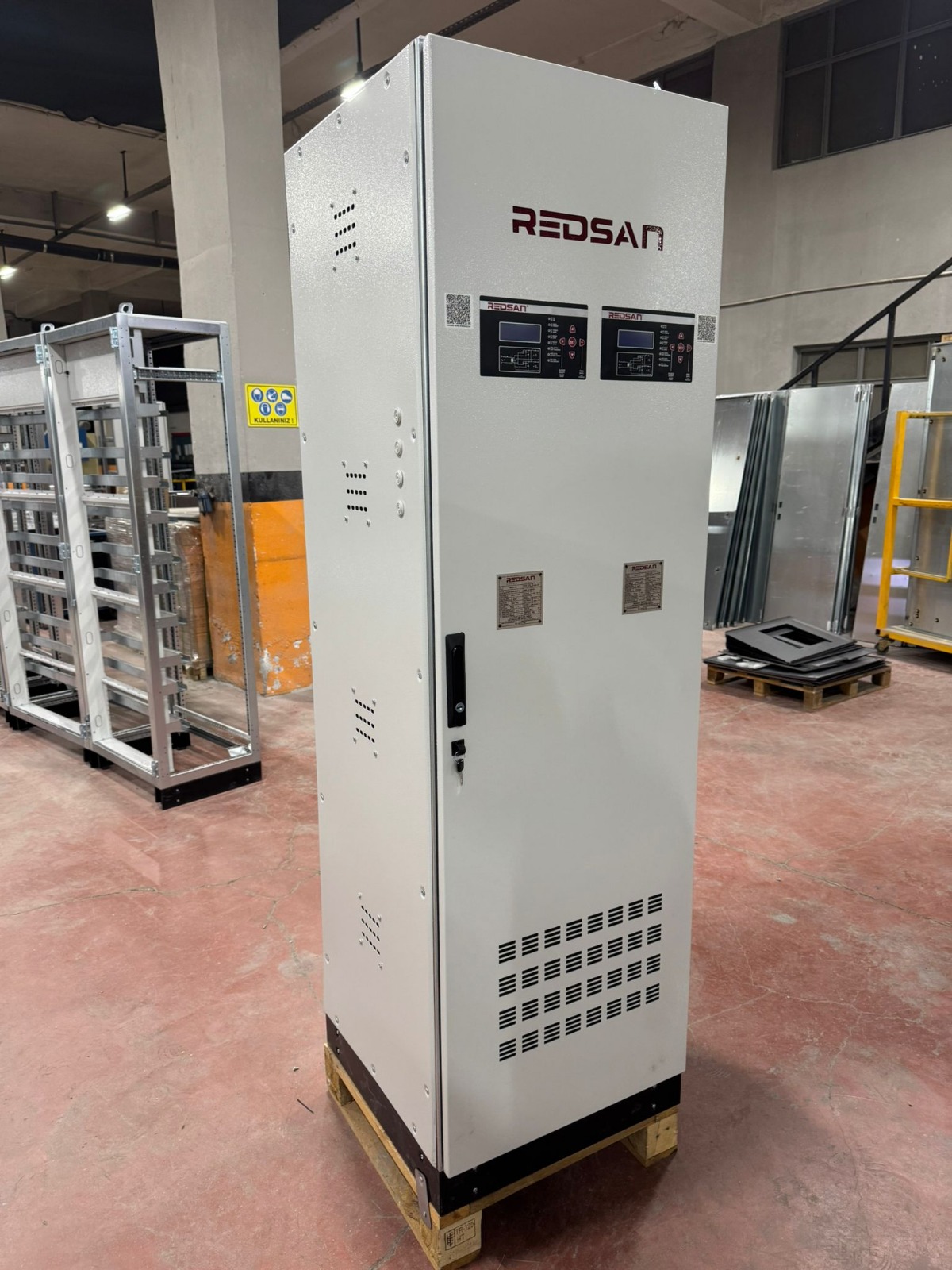
What Are Industrial Rectifiers & Battery Chargers?
Industrial rectifiers and battery chargers are critical power supply systems used in HV (High Voltage), MV (Medium Voltage), and LV (Low Voltage) energy control and automation applications.
They ensure uninterrupted DC power for essential functions such as:
• Protection relay control
• Circuit breaker operation
• Communication systems
• Automation and control circuits
• Emergency lighting during power outages
These systems are designed to operate with battery support, guaranteeing reliable DC power even when the AC grid fails.
How Do Industrial Rectifiers Work?
Industrial rectifiers convert single-phase or three-phase AC mains power into stable DC power suitable for industrial applications.
First, the incoming AC voltage is reduced to the required level using a step-down transformer, which also provides galvanic isolation to ensure safety and system reliability. The rectifier circuit—typically based on thyristor or semiconductor technology—then converts AC power into DC power.
The generated DC output is filtered to eliminate ripples, resulting in smooth, clean, and stable DC energy.
Using advanced rectifier control software, this DC power:
• Supplies continuous energy to DC loads
• Charges batteries according to float, boost, and equalize charging modes
Operation During Power Failures
In the event of an AC grid failure, the rectifier system automatically switches to battery operation, ensuring uninterrupted power supply to all connected DC loads.
The batteries continue to support the system for a pre-calculated backup duration (such as 4, 6, 8, or 12 hours), based on the programmed discharge parameters.
Once grid power is restored, the rectifier seamlessly resumes operation and recharges the batteries automatically.
